Session One

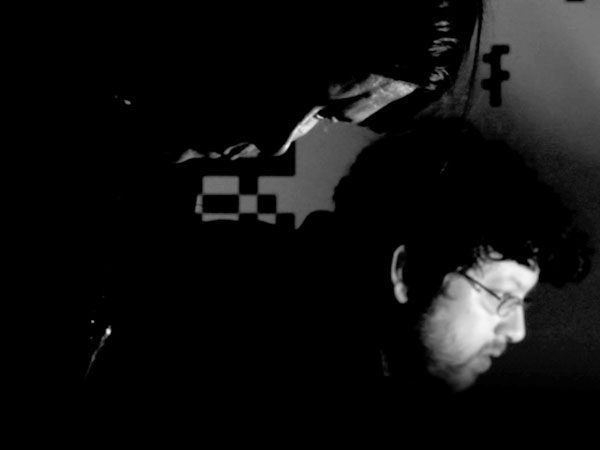
In October 2010, I made a film of two of my good friends — Precocious Mouse and Roberto Crippa — performing their first improvised experimental music collaboration.

If you like analogue electronic soundscapes with live percussion, this one’s for you.

Shot on a Canon 550D and edited in Final Cut.

6 Holocaust Sites

In May 2011, I went to Poland to visit a number of Holocaust sites — including the Auschwitz-Birkenau and the Krakow Ghetto — and this is the 1-hour video diary I made, complete with commentary:

The creation of this film was quite accidental: instead of stopping every few seconds to take pictures, I started recording video. But, realising this silent footage would be uninteresting by itself, I thought it might be helpful to describe what I was seeing — and even provide some historical context.

What came out was 2 hours of raw footage, shot on my lowly iPhone 3GS, and eventually edited down to 1 hour in iMovie.

(For the type fiends out there, the font for the title cards is Futura Bold Condensed.)

(Please also note I wear different — and better — glasses these days.)

Susan Cain on Creativity, Solitude and the Dangers of Brainstorming

Susan Cain’s article, The Rise of the New Groupthink, in the New York Times confirms something I’ve known instinctively for a long time: you’re more creative when you work by yourself.

As she puts it:

Research strongly suggests that people are more creative when they enjoy privacy and freedom from interruption. And the most spectacularly creative people in many fields are often introverted… They’re extroverted enough to exchange and advance ideas, but see themselves as independent and individualistic. They’re not joiners by nature.

Time to erect some partitions in the office, methinks.

Skeletons in the Portfolio

by David Nguyen

Recently, while discussing with a friend a logo I designed some years ago, I left him almost shellshocked when I condemned it with savage force. The poor guy: all he could do was stand there frozen, speechless while I blasted through a litany of visual and conceptual errors — all the while maintaining that these mistakes had not been my fault. I was operating under terrible conditions, I explained: management had imposed an inept design process, and I was but the Mac-shaped conduit for the succession of poor decisions that followed thereafter. The result, safe to say, did not meet my standards so I left it out of my portfolio lest it damage my reputation.

My friend’s startled reaction to my diatribe, it seemed, had stemmed from a modest assumption about a designer’s relationship to his work: a designer must like everything he makes.

I gently corrected him.

Unfortunately, far from being an isolated incident, this is a common scenario for the professional designer: for all the effort they pour into every project, designers come to accept that significant chunks of their work will never end up in their portfolios. The reasons for this pessimism are varied (though always linked to the company we work for, the client or our own tastes), but it’s not unusual to find ourselves working at agencies for years churning out dozens, even hundreds, of projects and find that barely a handful of them will be worthy of a place in the hallowed portfolio. In the worst-case scenario, a long train of average projects can turn into an avalanche of mediocrity that threatens to completely decimate our portfolios. The task of getting that next job or commission, then, is suddenly all that more difficult.

The curious result of this phenomenon is that it effectively instills a mercenary mindset in designers: as much as we remain committed to solving our clients’ problems, we end up serving our self-interest by identifying ‘portfolio projects’ that deserve an extra dose of passion over the minimum of utmost professionalism (I wouldn’t advocate anything less).

But if this sounds calculated, dare I say even Machiavellian, it’s important to note that successful design careers are rarely measured by standard metrics like job titles or bonuses. No, as designers we live and die by our portfolios so it’s our duty to fill them with the best examples of our design skills. Accepting that we have to do bad work is part and parcel of being a working designer but we mustn’t forget that our portfolios — the works we want to show to the world; the projects we’ll happily sign our names to — are what ultimately define the trajectory of our career. All we have to do is decide if the current project can nudge it in the right direction.

The High Art of the Airline Safety Card

In the Paris Review, Avi Steinberg offers a sardonic yet insightful analysis of the design of airline safety cards:

A 1992 cross-cultural study conducted at Embry-Riddle Aeronautical University determined that people prefer graphic illustrations instead of photography on airline safety cards. Photos, the study claimed, are inevitably full of distracting detail, or “visual noise.” Hence the safety-card aesthetic: spare, noiseless projections that maintain a zenlike neutrality to the chaos and horror of the actual event. It comes as no surprise that these drawings are always a centimeter away from completely missing the point. According to the 1992 study, European passengers are more apt to correctly identify an image of a high-heeled shoe, whereas Americans, a more homely bunch, are more apt likely to classify the high-heel simply as “a shoe”—the consequences of this misidentification can be tragic. In plane crashes and minimalist art, every detail matters.

Behind Facebook

It’s rare that discussions about the people behind Facebook go beyond Mark Zuckerberg, but two recent articles offer some new insights into the company’s unheralded design and content strategy teams.

There’s a brief interview with lead designer Ben Blumenfeld talking about the ideal Facebook designer and an in-depth interview with content strategist Tiffani Jones Brown who reveals the company’s approach to content strategy, particularly when the content is mostly user-generated:

The things people share and the information our system produces to describe those things (both called stories) are central to Facebook’s social design, and have become even more so as the content strategy team has grown. Planning, creating, and maintaining these stories is a big part of our job.

Jonathan Hoefler Talks About Webfonts

Type at the Crossroads, Jonathan Hoefler’s presentation about designing fonts for the screen, is essential viewing for designers and type enthusiasts.

Hoefler, the preeminent type designer and founder of Hoefler & Frere-Jones, discusses not only the technical challenges of optimising webfonts but explores the principles of design through two related subjects: ‘ideas versus forms’ and ‘design systems’.

The Strange Typography of Andrea Arnold’s ‘Wuthering Heights’

by David Nguyen

Andrea Arnold’s transgressive adaptation of Emily Brontë’s classic novel Wuthering Heights feels so raw it’s almost stripped down to the bones.

Abandoning the high theatrics and sweeping soundtracks of previous interpretations, Arnold’s version pares away narrative and dialogue to focus on atmosphere, allowing the story’s volatile emotions to bubble beneath the surface and, eventually, explode.

Shot in murky tones by Robbie Ryan (who won the Golden Osella award for cinematography at the 2011 Venice Film Festival), Wuthering Heights recounts the story of the doomed relationship between childhood friends Cathy and Heathcliff against the backdrop of the punishing Yorkshire highlands, a place that feels so far removed from civilisaton to be virtually prehistoric: its mountainous landscapes are shrouded in mist; its plains soaked in rainwater; its inhabitants routinely covered in dirt and mud.

Arnold enriches the ambience by punctuating the film with lingering close-ups of nature including blades of grass and the wings of moths, even using a similar technique to photograph strands of Cathy’s hair and Heathcliff’s bleeding skin.

The overall effect is a film that feels so unvarnished, so primal, that the elements could break through the screen at any moment. Arnold’s vision of nature feels so real and intense that it almost becomes a character in itself, as if the earth was channeling the desire, anger and despair of the major characters.

Yet for all of the considered stylistic choices, the film suffers from a flaw that, as a designer interested in typography, I find so bizarre it nearly proves fatal: the choice of font for the opening titles.

Not to be confused with the title card in the trailer (which is also on the poster), the title card for the movie itself looks something like this (at the time of writing the film is unavailable on DVD so I offer this approxmation):

The type, set in Bauhaus or one of its derivatives, features simple geometric forms to project what is an unmistakble retro-futuristic aura. What this has to do with Arnold’s film is something of a mystery. As a design choice, the font feels so alien and incongruous to the tone of the movie that it spoils what is otherwise a superb artistic achievement — especially considering all the care and effort put into every other aspect of the production.

The UK poster for the movie suffers from a similar typographical problem:

In this case, the culprit is the ubiquitous Avant Garde, a font that, for the record, I love, but makes for a poor choice here. Ignoring the fact the poster is badly typeset (and overlooking the one line of text, “Based on the novel by Emily Bronte”, inexplicably set in Arial), the clinical geometry of Avant Garde offers neither a reference to the film, an ironic comment about it or a neutral style to let the imagery speak for itself.

To that end, it remains unclear how the poster was intended to market the film: the type is set in a style suggesting the cover of a fashion magazine, while the key image (which uses a hue of brown that doesn’t even feature in the film) has the kind of giant-head heroism that makes Wuthering Heights look more like a war movie or a Roman epic than the brooding melodrama it is.

But the most alarming thing about the poster is that, right in the middle, in giant uppercase letters, is a summary of the entire visual and metaphorical concept for the film:

Love is a force of nature.

As a brief for a design project, it can’t be much clearer. How the result got so muddy, then, is anyone’s guess